Your skin started peeling, turned red and tight, or simply never became comfortable with retinol. That experience is common, especially for people with sensitive or reactive skin. It is also why botanical “retinol alternatives” have become so popular. The category can be confusing, though: bakuchiol, Bidens pilosa, and retinol are three distinct ingredients, and a study of one does not establish the performance or safety of another.
The best choice begins with the ingredient list, not the product nickname. Here is what each ingredient is, what the research can reasonably tell us, and how to build a routine without treating “retinol alternative” as a promise of identical results.
What Retinol Does and Why It Can Be Difficult
Retinol is a cosmetic form of vitamin A. After application, it is converted through intermediate steps into retinoic acid, the biologically active form that interacts with retinoid receptors in skin. Retinoids have a substantial evidence base for the appearance of photoaging, uneven texture, fine lines, and discoloration. Prescription retinoids and over-the-counter retinol are not identical in strength, conversion, or irritation potential.
The same activity that makes retinoids useful can make them difficult to tolerate. Dryness, peeling, stinging, and redness can occur, particularly when someone starts too often, combines several exfoliating products, or already has a disrupted skin barrier. These reactions are not a required sign that a product is “working.” They are signs to reduce frequency, simplify the routine, or seek professional advice if irritation persists.
Retinol is usually introduced gradually at night and paired with moisturizer and daytime sunscreen. People who use prescription retinoids should follow their prescriber’s directions. Pregnancy and breastfeeding questions should also be discussed with a qualified healthcare professional rather than answered by a general product claim.
What Is Bakuchiol?
Bakuchiol is a compound associated with the seeds and leaves of Psoralea corylifolia, also known as Babchi. It is not vitamin A and is not converted into retinoic acid. Laboratory work has found some overlap between gene-expression patterns associated with bakuchiol and retinol, which helped establish its reputation as a botanical retinol alternative. Overlap in a laboratory model does not make the ingredients chemically or clinically identical.
The best-known human comparison enrolled 44 adults for 12 weeks. Participants used either a 0.5% bakuchiol cream twice daily or a 0.5% retinol cream once daily. Both groups showed improvement in measures of wrinkles and hyperpigmentation in that study, while the retinol group reported more scaling and stinging. The result is encouraging, but it applies to the specific formulas, concentrations, schedule, participants, and study period evaluated.
It was a small study, it did not establish that every bakuchiol product performs like every retinol product, and it did not study pregnancy or breastfeeding. Bakuchiol can also cause sensitivity in some people; botanical does not mean allergy-proof.
What Is Bidens Pilosa?
Bidens pilosa is a different botanical. Extracts from this flowering plant are used in cosmetic formulas intended to support smoother-, firmer-, or more even-looking skin. Some supplier and laboratory research discusses retinoid-like pathways, which is why the ingredient may appear in products described as botanical retinol alternatives. Although it is distinct from bakuchiol, both botanicals can appear in the wider retinol-alternative category.
ARNEUX GLOW, RENEW, and FOCUS contain Bidens pilosa extract. They do not contain bakuchiol. Knowing the specific botanical makes it easier to compare formulas, understand the supporting ingredients around it, and choose a texture and routine that fit your skin.
All three formulas contain fragrance ingredients. If fragrance is a known trigger for your skin, review the full INCI before use and patch test rather than relying on a “retinol alternative” category label.
Bakuchiol vs Retinol: A Direct Comparison
Ingredient family: Retinol is a vitamin A derivative. Bakuchiol is a distinct botanical compound. Bidens pilosa is a separate botanical extract again.
Evidence: Retinoids have the deepest clinical literature, although evidence and irritation differ between prescription retinoids and cosmetic retinol formulas. Bakuchiol has promising but much smaller human evidence, including the 44-person comparison. Research on Bidens pilosa is earlier and specific to that botanical, so its role is best considered separately.
Tolerance: Retinol commonly requires a gradual introduction. Bakuchiol was better tolerated than retinol in the small comparative trial, but irritation or allergy remains possible. A Bidens pilosa formula must be judged as a whole; fragrance, carrier oils, preservation, and the rest of the INCI can affect tolerance.
Timing: Retinol is commonly used in the evening. Bakuchiol and Bidens pilosa products may be labeled for morning or evening use depending on the formula. Regardless of the active, broad-spectrum sunscreen is an important daytime step for anyone concerned with visible photoaging or uneven tone.
Pregnancy and breastfeeding: A product being plant-derived does not by itself establish use during pregnancy or breastfeeding. The published bakuchiol comparison involved nonpregnant adults and is not a reproductive-safety study. Review the exact product with your healthcare professional.
Is Bakuchiol as Effective as Retinol?
One small trial found improvement with both of the tested formulas over 12 weeks and did not find a statistically significant difference between groups for the reported wrinkle and pigmentation outcomes. That is not the same as proving universal equivalence, and it is not a noninferiority conclusion for the entire product category.
Retinoid performance varies by molecule, concentration, conversion, vehicle, and adherence. Bakuchiol performance also varies by concentration, purity, stability, and vehicle. A person may use the gentler product more consistently, which can be practically valuable even when the evidence base is smaller. The formula you can tolerate and use as directed may be more useful than a stronger active that repeatedly disrupts your routine.
Bidens pilosa can be a thoughtful botanical choice within a cosmetic routine. Look for smoother-looking texture, hydration, and a comfortable daily experience, while keeping expectations distinct from those of a prescription treatment.
Can You Use a Botanical Retinol Alternative Every Day?
Follow the directions for the specific product. Even a well-tolerated botanical formula can become uncomfortable when several new actives are introduced at once. Begin a few times per week if your skin is reactive, patch test first, and increase only when the skin remains comfortable. Stop use if persistent burning, swelling, or rash develops.
Daily use is not automatically better than consistent use at a frequency your skin tolerates. Keep the rest of the routine simple during the introduction period: a gentle cleanser, moisturizer, and daytime sunscreen make it easier to assess the new product.
How to Use ARNEUX Retinol-Alternative Care
Step 1: GLOW serum
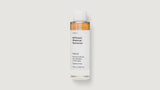
ARNEUX GLOW · Retinol Alternative Serum is a lightweight serum with Bidens pilosa extract, jojoba oil, sea buckthorn, rosehip oil, and hyaluronic-acid ingredients. Apply a small amount after cleansing and before moisturizer, according to the label. The formula contains parfum and declared fragrance allergens, so introduce it gradually if your skin is sensitive.
Step 2: RENEW moisturizer
ARNEUX RENEW · Retinol Alternative Moisturizer is a daily moisturizer with Bidens pilosa extract, jojoba oil, murumuru butter, sea buckthorn, and hyaluronic-acid ingredients. It can follow GLOW if both formulas are well tolerated. Layering products does not guarantee faster or stronger results; it mainly combines their textures and supporting ingredients in one routine.
Step 3: FOCUS eye serum
ARNEUX FOCUS · Retinol Alternative Eye Serum is used around the orbital bone for hydration and a smoother, more rested-looking eye area. Pat on a small amount without placing it directly in the eyes. The formula contains parfum, geranium oil, and declared fragrance allergens; patch test first if your eye area is sensitive to scented products.
You do not need all three products to begin. Choose the format that fits your routine, add one product at a time, and pay attention to comfort. The AGELESS routine brings GLOW, FOCUS, and RENEW together. If you use a prescription retinoid or are managing a diagnosed skin condition, ask your clinician how a new cosmetic formula fits with that plan.
Who Might Choose Each Option
Retinol may suit someone who wants the larger evidence base, understands the adjustment process, and tolerates the selected formula. Bakuchiol may appeal to someone who wants a studied botanical option and understands that the human evidence is smaller. A Bidens pilosa formula may suit someone who likes its complete texture and ingredient profile and wants a botanical retinol-alternative routine.
Sensitive skin is not one uniform category. Fragrance sensitivity, rosacea, eczema, allergy history, and a temporarily impaired barrier create different needs. Product-level ingredients and individual response matter more than a broad “gentle” label.
A Note on Certification
COSMOS certification addresses criteria such as ingredient origin, processing, manufacturing, packaging, and labeling. It does not by itself mean that a product is made without fragrance, hypoallergenic, clinically tested, suitable during pregnancy, or equivalent to retinol. Check the certification tier and formula details shown on each qualifying product page.
The Clear Answer
Retinol, bakuchiol, and Bidens pilosa are different. Retinol has the most extensive evidence and a higher likelihood of an adjustment period. Bakuchiol has promising early human research and may be better tolerated in some formulas, but the evidence is not universal and does not establish pregnancy safety. Bidens pilosa is the botanical used in ARNEUX GLOW, RENEW, and FOCUS; those products should be chosen for their own formulas, directions, and cosmetic benefits.
The right routine is the one that matches the ingredient list, your skin’s tolerance, and realistic expectations. Introduce it gradually, use sunscreen, and let consistent care, rather than an exaggerated comparison, do the work. Discover the Anti-Aging collection.
Sources and Further Reading
- Randomized 12-week comparison of 0.5% bakuchiol and 0.5% retinol
- Laboratory and clinical background on bakuchiol as a functional retinol analogue
- Published report of allergic contact dermatitis associated with bakuchiol
Frequently Asked Questions
Is a retinol alternative better than retinol for sensitive skin?
For many people with sensitive skin, a botanical retinol alternative is easier to tolerate than retinol, because it is not a vitamin A derivative.
Retinol works well for many people but often causes dryness, flaking, and stinging in the first weeks, which is why dermatologists usually suggest starting it slowly. Botanical alternatives such as Bidens pilosa extract are chosen by people who want smoother-looking skin without that adjustment period. GLOW is a lightweight retinol alternative serum with Bidens pilosa extract for fine lines and uneven-looking texture. Whatever you choose, patch test first and introduce one new active at a time so you can tell what your skin is reacting to.
Can I use a retinol alternative during the day?
Yes, many botanical retinol alternatives can be used morning or evening, unlike retinol, which is usually reserved for night.
Retinol is typically applied at night because it can increase sun sensitivity and breaks down in light. Botanical alternatives are generally more flexible. RENEW is a retinol alternative moisturizer with Bidens pilosa extract that is suitable for morning or evening use and layers under SPF. In the morning, follow any serum or moisturizer with a broad-spectrum sunscreen, since daily SPF remains the single most effective step against visible sun damage.
What order do I apply a retinol alternative serum and moisturizer?
Apply the serum first on clean skin, let it absorb, then seal it in with moisturizer.
Thinner, water-light textures go on before richer creams so each layer can reach the skin. In practice that means cleanse, apply 2 to 3 drops of GLOW, wait a moment, then follow with RENEW. For the eye area, use a dedicated eye product rather than a face serum; FOCUS is a retinol alternative eye serum patted around the orbital bone. If you want all three in one set, AGELESS combines GLOW, FOCUS, and RENEW.
How long does a retinol alternative take to show results?
Expect to use any texture-focused routine consistently for several weeks before judging visible changes.
Skin renews its surface layer over roughly a month, and it often takes longer for fine lines and texture to look different, so short trials can be misleading. Use the product as directed, every day or as tolerated, and take a photo in the same light at the start so you can compare fairly. Keep the rest of your routine stable during that time. If you see persistent redness or irritation, stop and speak with a dermatologist. Consistency beats intensity: daily use for 8 to 12 weeks tells you far more than a stronger product used for two.
If you are starting a retinol alternative routine, GLOW is a lightweight evening serum with Bidens pilosa extract that supports smoother, firmer-looking skin. Apply 2 to 3 drops to clean skin, avoid the eye area, and follow with RENEW. GLOW is 99% natural origin and COSMOS NATURAL certified by ECOCERT Greenlife. It contains fragrance, so patch test before regular use; visible changes develop gradually and vary by skin.